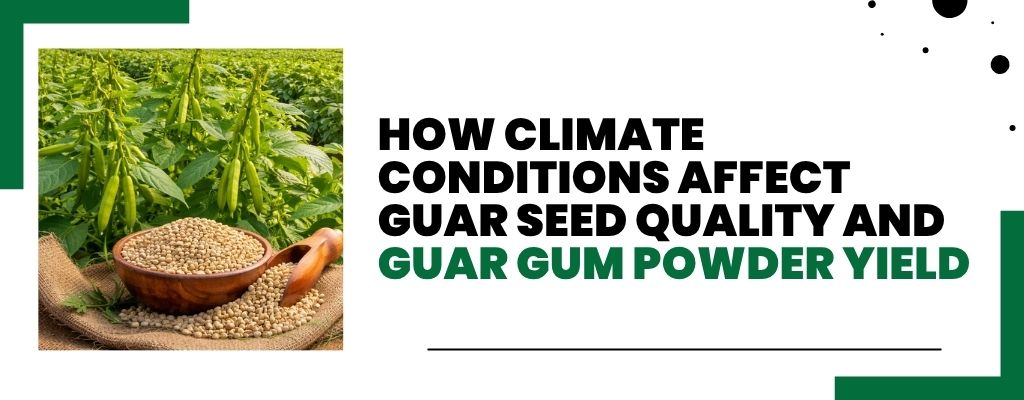
Guar, often referred to as a resilient crop of arid and semi-arid regions, plays a critical role in supplying the global demand for guar gum powder. For businesses across Gulf countries, where guar gum powder is widely used in food processing, oil drilling, textiles, and pharmaceuticals, understanding how climate conditions influence guar seed quality and yield is essential for making informed sourcing decisions.
This blog explores the direct connection between climate variables and the final output of guar gum powder , helping importers, distributors, and industries choose the right guar gum powder supplier with confidence.
Guar is predominantly grown in regions with low rainfall and high temperatures, making it highly suitable for areas like Rajasthan in India. However, despite its drought-resistant nature, guar is not immune to climatic fluctuations. Variations in temperature, rainfall, humidity, and soil conditions significantly impact both seed quality and the yield of guar gum powder.
For buyers in Gulf countries, where environmental conditions are harsh and local cultivation is limited, reliance on guar gum powder manufacturers in India becomes critical. The climatic stability of growing regions directly determines the consistency and quality of the final product.
Temperature plays a decisive role throughout the guar crop cycle. Ideally, guar requires warm conditions ranging between 25°C to 35°C for optimal growth. Excessively high temperatures, especially during flowering, can lead to poor pod formation and reduced seed quality.
On the other hand, sudden drops in temperature or unseasonal cold spells can delay maturity and affect gum content. Lower gum content means reduced extraction efficiency, ultimately impacting the yield of guar gum powder.
For industries in the Gulf, this translates to variability in viscosity and performance, key factors when selecting a reliable guar gum powder manufacturer .
Although guar is drought-tolerant, it still requires moderate and well-distributed rainfall during the early stages of growth. Insufficient rainfall can stunt plant development, while excessive rainfall can cause waterlogging, leading to root diseases and poor seed formation.
Erratic monsoon patterns have become increasingly common, and this unpredictability directly affects the supply chain. Guar gum powder exporters must carefully monitor crop conditions to ensure consistent quality and supply.
For Gulf-based buyers, working with experienced guar gum powder suppliers who maintain strong relationships with farmers helps mitigate these risks.
Soil moisture is another critical factor influencing guar seed quality. While the crop thrives in dry conditions, a certain level of moisture is essential during germination and early growth.
High humidity levels during harvesting can damage seed quality, leading to fungal infections and discoloration. This not only reduces the market value of guar seeds but also affects the purity and color of the final guar gum powder.
Premium guar gum powder manufacturers in India invest heavily in post-harvest processing and storage technologies to preserve seed integrity, ensuring that Gulf markets receive high-grade products.
Climate conditions ultimately determine two key factors:
Endosperm Content – The part of the seed used to produce guar gum powder
Viscosity Levels – A critical performance parameter for industrial applications
Favorable climatic conditions result in seeds with higher endosperm content, leading to better yield during processing. Conversely, adverse weather conditions reduce extraction efficiency and increase processing costs.
For industries such as oil drilling in the Gulf, where guar gum powder is used as a thickening agent, even slight variations in viscosity can impact operational efficiency. This makes sourcing from reliable guar gum powder exporters even more important.
Climate change has introduced new challenges for guar cultivation. Rising temperatures, unpredictable rainfall, and extreme weather events are affecting crop cycles and yields.
This has a ripple effect on global supply and pricing. Gulf countries, being major importers, often face price volatility due to fluctuations in Indian guar production.
Forward-thinking guar gum powder suppliers are now adopting climate-resilient farming practices, including
Drought-resistant seed varieties
Improved irrigation systems
Advanced weather forecasting tools
Sustainable farming techniques
These measures help stabilize production and ensure consistent supply for international markets.
For businesses in Gulf countries, climate-driven variations in guar production are not just an agricultural concern; they directly impact procurement strategies, pricing, and product performance.
Here’s why it matters:
Consistency in Supply: Climate affects harvest volumes, influencing availability
Quality Assurance: Seed quality determines gum purity and viscosity
Cost Efficiency: Poor yields lead to higher prices and supply chain disruptions
Partnering with experienced guar gum powder manufacturers in India ensures better transparency and reliability. Established suppliers often have diversified sourcing networks, reducing the risk of climate-related shortages.
Given the influence of climate on guar production, selecting the right guar gum powder supplier becomes a strategic decision.
Look for suppliers who:
Source from multiple growing regions
Maintain strict quality control processes
Invest in modern processing technologies
Offer transparency in sourcing and production
Have strong export experience to Gulf countries
Reliable guar gum powder exporters understand regional requirements and provide tailored solutions based on industry needs.
Climate conditions play a fundamental role in shaping the quality and yield of guar seeds, which in turn affects the performance of guar gum powder. From temperature fluctuations to rainfall variability, every environmental factor contributes to the final product that reaches Gulf markets.
For importers and industries in the Gulf, staying informed about these factors is essential for making smart sourcing decisions. By collaborating with trusted guar gum powder manufacturers in India, businesses can ensure consistent quality, stable supply, and optimal performance across applications.
In an increasingly unpredictable climate landscape, knowledge and the right partnerships are the keys to long-term success in the guar gum supply chain.